
Proctor Wraps & Tapes
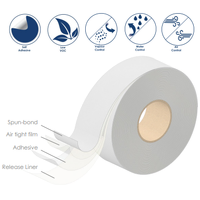
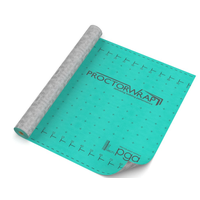
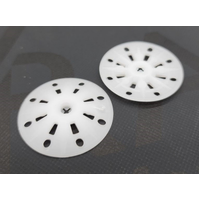
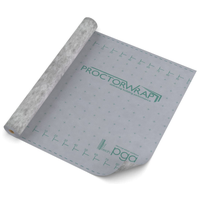
Insulation Solutions & Related Product for your Building & Construction requirements.
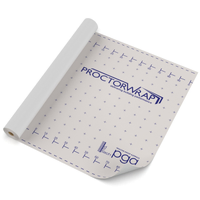
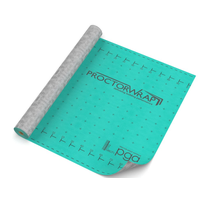
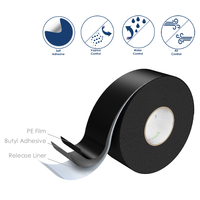
Proctor offers one the most comprehensive range of construction membranes available in Australia with materials available to suite most applications in most climates. The full range includes vapour permeable water resistant wall wraps & roofing underlays, vapour control layers, air barriers, geotextile membranes and composites and a comprehensive line-up of compatible tapes and accessories.
WP Supplies is now a Proctor distributor specialising in pallet buy deals.
Contact the WPS Team to discuss your requirements.
.jpg)
ProctorWrap — Pliable Building Membranes for Wall, Roof & Air Barrier Systems
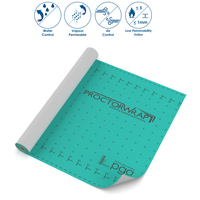
Getting a building's weather barrier wrong doesn't show up straight away. It shows up two years later, as damp in a wall cavity that should have been breathing properly. ProctorWrap is built to avoid that outcome with a range of pliable building membranes engineered to keep weather out while still letting moisture vapour escape from inside the wall or roof assembly.
WP Supplies stocks the ProctorWrap range as an authorised Proctor Group distributor, covering wall wrap, roof underlay and air barrier applications across residential and commercial builds. For builders, architects and specifiers working across Australia, that distributor relationship matters as much as the product itself. It's the difference between getting genuine and chasing an overseas supplier through customs delays while a frame sits exposed on site.
Building envelope failures are rarely dramatic. They're slow, meaning a membrane that traps moisture instead of releasing it, a lap that wasn't properly sealed, a wrap that degraded under UV exposure before the cladding went on. ProctorWrap's whole design philosophy is built around avoiding those slow failures, which is why the vapour permeability spec matters as much as the weather resistance spec.
What Is ProctorWrap?
ProctorWrap is a pliable building membrane, which means it is flexible enough to wrap around studs, noggings and irregular framing without tearing, while still doing the job of a rigid weather barrier. It sits in the same category as sarking and standard wall wrap, but it's built specifically around vapour permeability, which is the part most cheaper wraps get wrong.
Pliability sounds like a minor feature until you're on-site fixing membrane around a window reveal, a services penetration, or an irregular framing detail. A rigid or brittle membrane cracks or tears at exactly those points which are also the points most vulnerable to water ingress if the barrier fails. A genuinely pliable membrane conforms to the detail instead of fighting it, which is where a lot of the practical, on-site value of ProctorWrap shows up.
Proctor Wraps and Tapes as a System
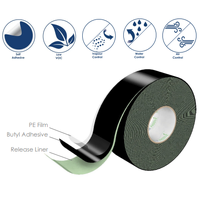
The membrane is only half the system. ProctorWrap is designed to be taped and sealed with matched Proctor tapes at laps, penetrations and junctions because a membrane with unsealed joints performs like no membrane at all. If you're speccing ProctorWrap, plan for the tape system alongside it rather than as an afterthought. A membrane and its tape need to be compatible in how they bond and how they flex, and a mismatched combination tends to fail exactly at the seams, which is the last place you want a failure on a completed build.
Vapour Permeable Membrane — Why It Matters
A weather barrier's job is simply to keep water out. But a wall cavity also needs to let moisture vapour that's already inside the building escape outward, or it condenses inside the wall where you can't see it happening.
The Difference Between Waterproof and Vapour Permeable
A fully waterproof membrane keeps liquid water out, but it also traps vapour inside the wall. A vapour permeable membrane like ProctorWrap does both jobs at once. It stops driving rain and wind-driven moisture from getting in, while still letting water vapour pass through and out. That's the distinction worth explaining to a client who assumes "waterproof" is always the better spec.
In practice, a fully waterproof membrane on the wrong application can do more harm than good, because it turns the wall cavity into a sealed bag that traps whatever moisture is already inside or from minor water ingress that would otherwise dry out naturally.
Where This Matters Most
Vapour permeability matters most in climates with real temperature swings between inside and outside, and in tightly sealed, well-insulated builds where trapped moisture has nowhere else to go. As Australian building practice has moved toward better-insulated envelopes with partly driven by energy efficiency requirements, the risk of trapped internal moisture has actually increased, which makes the membrane's permeability rating more relevant now than it might have been a decade ago on a leakier, less insulated build.
How Vapour Permeability Is Typically Rated
Membranes are usually rated by how much vapour they allow to pass through over a given area and time, and that figure is what separates a genuinely vapour-open membrane from one that's marketed as "breathable" without much permeability behind the claim. Worth confirming ProctorWrap's actual permeability rating against the data sheet if a client or certifier asks for the number directly.
Wall Wrap and Roof Underlay Applications
ProctorWrap covers both the wall and roof side of a build, which is worth calling out since a lot of trades assume they need two different product families.
Wall Wrap
Fixed to the external face of wall framing before cladding goes on, ProctorWrap's wall wrap membrane is the layer doing the actual weather-barrier work when the cladding is the finish, the membrane is what's keeping the building dry underneath it. It's a distinction worth making plain to clients who think of cladding as the weatherproofing layer cladding sheds the bulk of the water, but it's the membrane behind it that's actually managing what gets through joints, laps and fixing points in the cladding itself.
Roof Underlay
The same membrane logic applies with under roof sheeting or tiles, to keep wind-driven rain and dust out from above, while letting any moisture that gets into the roof space find its way back out rather than pooling against sarking that can't breathe. Roof space ventilation and membrane permeability work together here, but it does mean the membrane itself isn't the bottleneck stopping moisture from escaping.
Air Barrier Membrane Performance
Air leakage and water leakage are two different problems, and a membrane that only solves one isn't doing its full job. ProctorWrap is built to function as an air barrier as well as a weather barrier which reduces uncontrolled air movement through the wall or roof assembly, which matters for both energy efficiency and moisture control.
Uncontrolled air leakage doesn't just waste energy through draughts, it also carries moisture vapour through the wall assembly at whatever gaps exist, which can lead to condensation forming inside the wall cavity even on a membrane that's technically vapour permeable in the right direction.
That's part of why the air barrier function and the tape system are so closely linked. A genuinely sealed air barrier depends on the laps and penetrations being taped properly, not just the membrane spec on its own.
Construction Membranes in Australia: Built for the Climate
Membranes designed for European or UK conditions don't always hold up under Australian UV exposure and humidity swings. ProctorWrap membranes are supplied into the Australian construction market specifically for local conditions, it's worth stating plainly for anyone comparing imported product ranges.
Australian conditions present a genuinely different challenge to the European market a lot of building membranes originate from. UV exposure during construction is more intense, humidity swings between coastal and inland regions are wider, and bushfire-prone areas bring their own compliance considerations that don't factor into a European product spec at all.
A membrane that performs well in a UK climate isn't automatically a safe assumption for an Australian build, which is why sourcing through a distributor who understands local application carries real value beyond just logistics and lead time.
ProctorWrap: Authorised Proctor Group Distributor
WP Supplies is an authorised distributor of the Proctor Group range, which matters for two reasons: genuine product (rather than a substitute sold under a similar name), and stock availability without the lead times of importing direct.
Ordering & Stock
Wall wrap, roof underlay and the matched tape system are available as a package, same logic as the consumables point on your other product pages, since ordering the membrane without matched tapes is the most common spec mistake.
Working with a local, authorised distributor also means faster resupply mid-job if a run underestimates quantity, a genuinely useful advantage over importing a full project's worth of membrane upfront and hoping the estimate was right.
Frequently Asked Questions
What makes a membrane "vapour permeable" rather than just waterproof?
A waterproof membrane blocks water in both directions, including vapour trying to escape from inside the wall. A vapour permeable membrane like ProctorWrap keeps external water out while still letting internal moisture vapour pass through which prevents condensation building up inside the wall cavity.
Do I need Proctor tapes as well, or does the membrane work on its own?
The membrane is only as good as its sealing at laps and penetrations. ProctorWrap is designed to be used with the matched Proctor tape system running the membrane without it leaves gaps in the barrier at every join.
Is ProctorWrap suitable for both wall and roof applications?
Indeed! the range covers wall wrap and roof underlay, using the same vapour-permeable principle across both applications.
Why does it matter that WP Supplies is an authorised distributor rather than just a reseller?
An authorised distributor relationship means genuine Proctor Group product with proper local stock holding, rather than grey-market import or a substitute product marketed under a similar name, which matters both for performance and for any warranty or compliance documentation tied to the build.