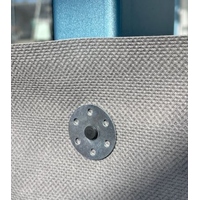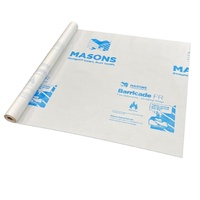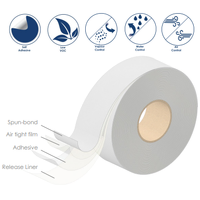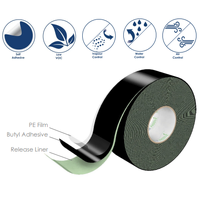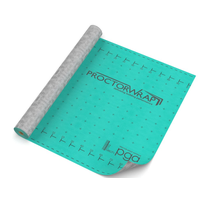
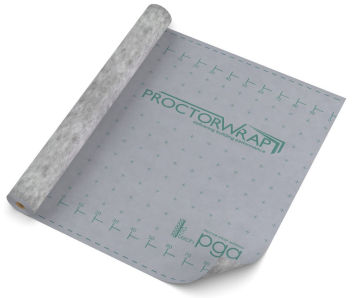
ProctorWrap RW & RW-IT (Residential Wall) Range
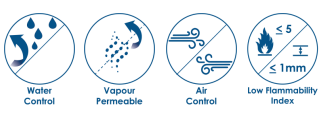
Vapour Permeable Sarking for Wall Applications
ProctorWrap RW & RW-IT (Residential Wall) Wraps
WP Supplies, your pallet buy & tape specialist.
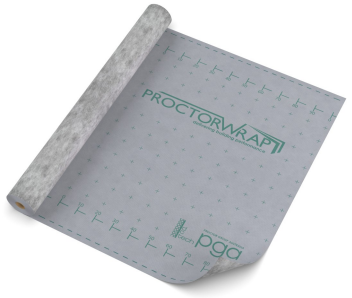
Contact the WPS Team for Pallet Rate Savings.
Product Description
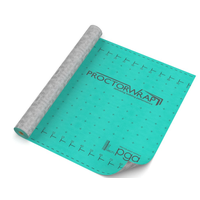
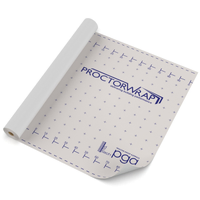
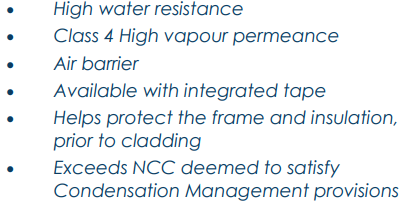
ProctorWrap™ RW is a triple layer thermo-calendared polyolefin non-woven textile, weather resistant barrier, bonded without adhesives. This product is also available with pre-applied integrated tape (RW-IT). This product meets the requirements of AS/NZS 4200.1: 2017.
Applications
ProctorWrap RW is suitable behind both residential brick veneer and lightweight clad walls in warm to cold climate zones where vapour pressure is typically higher inside the building compared to outside. This product meets the requirements for use in BAL regions 12.5 to FZ in accordance with AS 3959.
Installation
ProctorWrap RW should be installed in accordance with AS/NZS 4200.2 Pliable Building Membranes and Underlays, Part 2 Installation Requirements and in full accordance with the product installation guide. ProctorWrap RW must be installed with the printed surface facing outwards.
RW-IT (Integrated Tape)
To improve the integrity of installation, ProctorWrap RW-IT is also supplied with a factory applied integrated tape.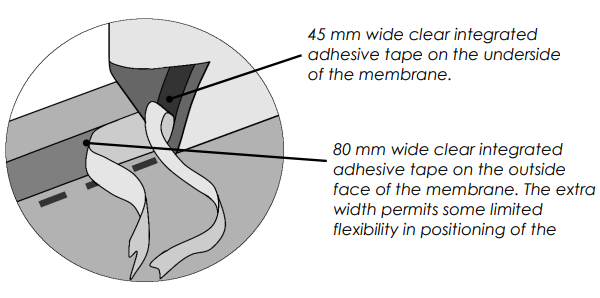
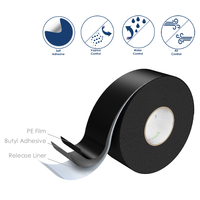
Proctor recommends ProctorWrap HighTack PLUS Tape.
Durability
Although ProctorWrap RW can be used as temporary protection during construction, it is not a waterproof membrane as classified by AS 4654.2. The product may be damaged by careless handling, high winds or vandalism. Any damaged areas should be replaced before completion. To ensure maximum long term durability, ensure that ProctorWrap RW is covered up by the primary cladding material as soon as possible, and not left exposed to UV for longer than 6 weeks.
.PNG)
ProctorWrap RW: Residential Wall Wrap Built for Standard Home Builds
A house frame doesn't sit exposed the way a commercial envelope does. Wrap goes up, cladding usually follows within a reasonably tight window, and the whole run is smaller in scale than a multi-storey commercial façade. ProctorWrap RW is the residential line built around that reality. It is a non-woven wall underlay sized and specked for standard home-building fixing methods and typical build timelines without the added cost of commercial grade spec a house frame need WP Supplies stocks the full RW range, including the self-adhesive RW-IT variant for faster install on residential jobs.
What ProctorWrap RW Is Built For
Sized for a Standard Residential Timeline
Most residential builds move from wrap install to cladding within a shorter window than a staged commercial project. This means there's less waiting on other trades to clear the same section of envelope, and the build sequence is generally more linear. RW is specced with that faster, more predictable timeline in mind, which is part of why it's the more cost-effective choice for a standard home build rather than defaulting to commercial-grade product across the board.
The Same Weather-Barrier Principle, Right-Sized
RW gives the same vapour-permeable weather barrier as the commercial CW line. The underlying performance principle doesn't change based on building type. What changes is the exposure tolerance and scale the product is built and priced around. That's a genuinely useful point to make to a client comparing quotes and wondering why a commercial-grade product costs more, it's what conditions the product is rated to handle.
Proctor RW Wall Wrap on a Standard Build
Fixing a House Frame
For a house frame going up on a normal residential schedule, RW is applied the same way any wall wrap membrane is fixed, with each subsequent run overlapping the one below so water sheds down and over each lap rather than into it. Getting the lap direction right matters just as much on a residential job as a commercial one, even though the total wall area is smaller.
Working Around Windows, Doors and Penetrations
A typical house has proportionally more window and door openings relative to its total wall area than a large commercial façade, which means junction detailing is a bigger share of the total install effort on a residential job. RW's non-woven, pliable construction is built to conform around these reveals and penetrations without tearing, but the tape system still needs to be applied properly at each one. the membrane dressing into a detail cleanly doesn't replace the need to seal it.
Residential Wall Wrap as a Weather Barrier
RW keeps wind-driven rain and moisture out of the wall assembly while allowing vapour from inside the wall to escape, regardless of building type. Where RW earns its place specifically on a residential job is in matching that performance to a home-building budget and schedule, rather than asking a client to pay for commercial-scale exposure tolerance their build will never actually need.
Wall Underlay for a Typical Home
As a wall underlay, RW sits behind the cladding doing the actual weather-barrier work. It means this is an imporatnt distinction worth explaining to clients who assume the cladding itself is what's keeping the house dry. Cladding sheds the bulk of the water and gives the house its finished look, but it's the membrane underneath managing what gets through joints, laps and fixing points in the cladding itself.
Non-Woven Wall Underlay: What That Means for RW
RW is a non-woven membrane rather than a woven or laminated film product, which is what gives it the flexibility to conform around irregular residential framing details such as service penetrations and minor changes in wall plane, without tearing or needing extra patches. A woven or film-based membrane tends to be less forgiving around exactly these details, which is why non-woven construction has become the standard approach for a genuinely reliable wall underlay.
ProctorWrap RW-IT: Self-Adhesive Residential Wall Wrap
Why Self-Adhesive Changes the Install
RW-IT is the self-adhesive variant of the residential line, following the same logic as the self-adhesive option in the commercial CW range but sized for residential fixing. Instead of relying purely on mechanical fixing and taped laps, the membrane itself adheres directly to the substrate, speeding up install on a house wall run and reducing the number of separate fixing points that can fail over time. Even on a smaller-scale residential job, every mechanical fixing point is a labour cost and a potential future failure point. Reducing that total count with a self-adhesive membrane saves install time and reduces the long-term maintenance surface of the wall, the same benefit that applies on a larger commercial scale, just proportioned to a house-sized run.
Where RW-IT Fits
Best suited to residential jobs where install speed genuinely matters, a busy trade running several homes builds a month, or a build with a tight overall programme where time saved on wrap install helps keep the broader schedule on track. For an unhurried residential job, the standard mechanically fixed RW line does the same core job at a lower cost, so it's worth weighing install speed against budget on a job-by-job basis rather than defaulting to the self-adhesive option automatically.
(Note: confirm RW-IT's exact substrate compatibility and any application temperature limits against the data sheet before publishing.)
Choosing RW for a Residential Job
The core decision on a residential job is usually straightforward. RW covers the standard weather-barrier requirement for a typical home build. RW-IT is worth the extra cost specifically where install speed matters more than usual, whether that's a busy trade moving through multiple jobs or a build under real time pressure.
Where a residential project has unusually long exposure windows built into its schedule, a staged or owner-builder job progressing slower than a typical trade-run build. For instance, it's worth discussing whether the commercial CW line might be the better fit despite the higher cost, since RW is specced around a standard residential timeline rather than an extended one.
Ordering RW for Your Job
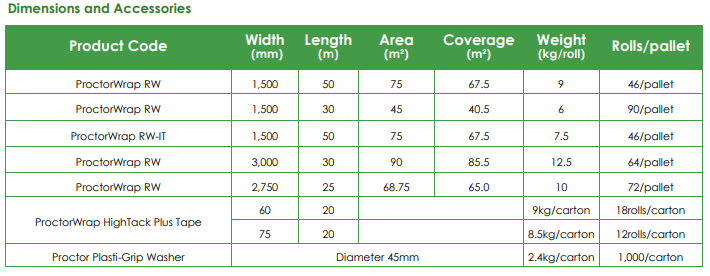
HighTack Plus for laps plus penetration sealing tape are worth speccing together rather than ordering the membrane on its own and sourcing tape separately from whatever's on hand. For a standard house build, estimating total wall area with a reasonable wastage allowance for cutting around windows, doors and corners keeps the order accurate without over-ordering.
Frequently Asked Questions
What's the difference between ProctorWrap RW and the commercial CW line?
RW is sized and specced for standard home-building fixing methods and typical residential timelines, where wrap generally moves to cladding within a shorter window than a staged commercial build. CW is built for the longer exposure and larger scale of a commercial envelope. Both are non-woven, vapour-permeable weather barriers built on the same underlying principle.
What does the "IT" in RW-IT mean?
IT denotes the self-adhesive variant where the membrane adheres directly to the substrate rather than relying solely on mechanical fixing, which speeds up install on a residential wall run.
Is RW-IT worth the extra cost on a standard home build?
It depends on how much install speed matters for your specific job and schedule. For a straightforward, unhurried build, standard RW does the same weather-barrier job at a lower cost. RW-IT earns its place where time saved on install genuinely affects the broader project timeline.
Can I use RW on a small commercial job instead of CW?
RW is specced for residential-scale exposure and timelines, so using it on a commercial application isn't necessarily wrong from a performance standpoint on a very small job, but it's generally safer to match the product line to the actual exposure conditions and compliance requirements of a commercial build rather than assuming residential-grade product will hold up the same way.
(PROCTOR-RW)
| SKU | PROCTOR-RW |
Be The First To Review This Product!
Help other WP Supplies users shop smarter by writing reviews for products you have purchased.