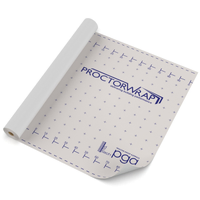
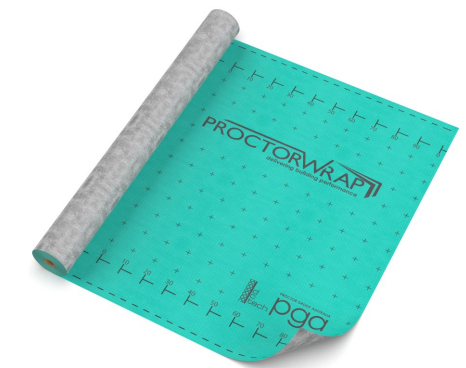
ProctorWrap HTS & HTS-IT (High Tensile Sarking) Range
Vapour Permeable Sarking for Roof and Wall Applications
ProctorWrap HTS & HTS-IT (High Tensile Sarking)
WP Supplies, your pallet buy & tape specialist.
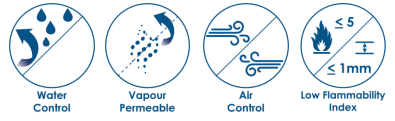
Contact the WPS Team for Pallet Rate Savings.
Product Description
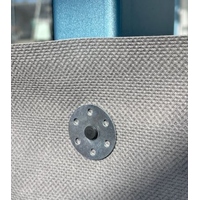
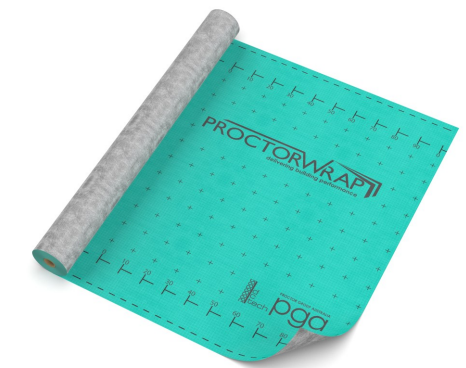
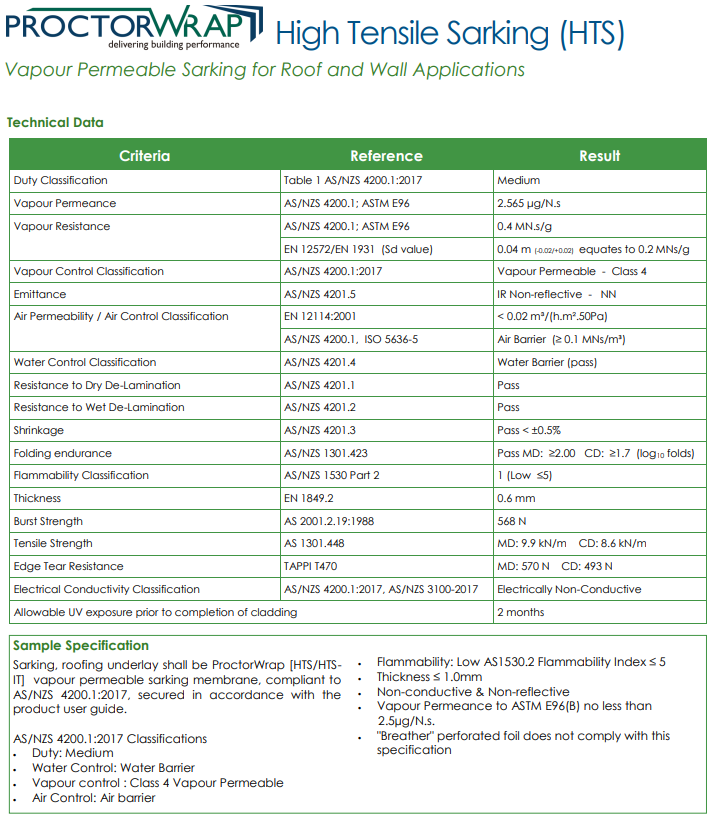
ProctorWrap™ HTS is a UV stabilised tear resistant 3-ply spun bonded polyolefin membrane with reinforcement scrim. ProctorWrap HTS meets the requirements of the AS/ NZS 4200.1:2017, is suitable for roof and wall applications and is also available with integrated tape (HTS-IT).
Applications
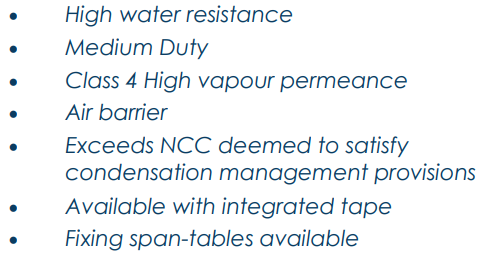
ProctorWrap HTS is medium duty classification and suitable for use underneath metal sheet, slate and tiled roofs and higher wind load wall applications. ProctorWrap HTS can significantly reduce the risk of condensation in the roof space when designed and installed correctly. HTS is suitable for use in BAL regions 12.5 to 40 in accordance with AS 3959.
Installation
ProctorWrap HTS should be installed in accordance with AS/NZS 4200.2 Pliable Building Membranes and Underlays, Part 2 Installation Requirements and in full accordance with the product installation guide. ProctorWrap HTS must be installed with the printed surface facing outwards.
ProctorWrap HTS-IT (Integrated Tape)
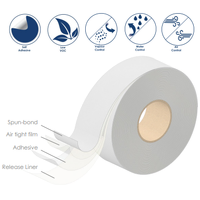
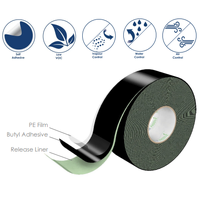
To improve the integrity of installation, ProctorWrap HTS-IT is also available with a factory applied integrated tape.
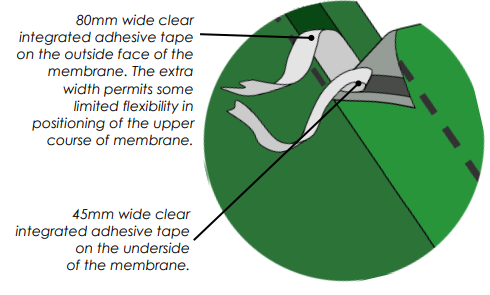
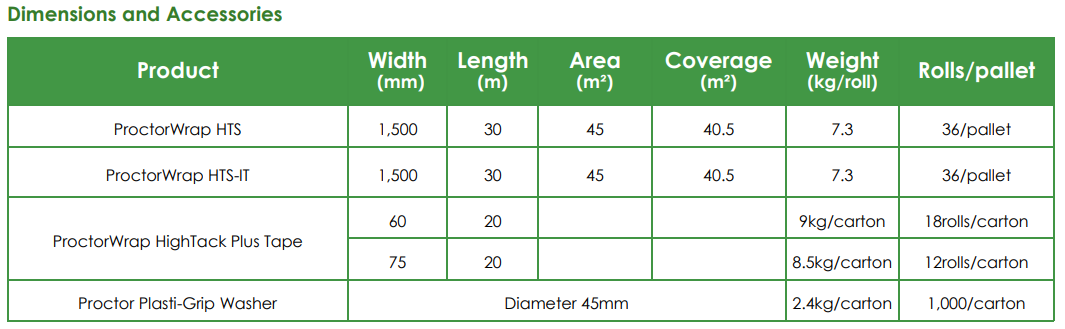
Proctor recommends ProctorWrap HighTack PLUS Tape.
Durability
Although ProctorWrap HTS can be used as temporary protection during construction, it is not a waterproof membrane as classified by AS 4654.2. The product may be damaged by careless handling, high winds or vandalism, and should not be left uncovered for longer than is absolutely necessary. Any damaged areas should be replaced before completion. To ensure maximum long term durability, ensure that ProctorWrap HTS is covered up by the primary roofing or cladding material as soon as possible, and not left exposed to UV for longer than 2 months.
ProctorWrap HTS: A High Tensile Sarking for Exposed Roof Spans
Roof sarking takes a different kind of beating to wall wrap. It's walked on during install, stretched across trusses before the roof goes on, and often left exposed to wind and weather for longer than anyone planned. A membrane that isn't built for tension fails sagging between trusses or tearing at the fixing point.
ProctorWrap HTS is the high tensile sarking line built specifically to hold its strength under load and stay tear resistant through the install window, not just on the spec sheet.
Roof sarking sits in a genuinely different stress environment to wall wrap. On a wall, the membrane is supported continuously by the framing behind it. On a roof, sarking is stretched across gaps between trusses or rafters, sometimes with several hundred millimetres of unsupported span, and it's expected to hold its shape under its own weight, under wind uplift, and under the weight of anyone who needs to walk across it during install. A membrane not built for that combination of loads sags generally pools water in low points and eventually tears at the fixing point where stress concentrates.
What "High Tensile" Actually Means on a Roof
Tensile strength is the difference between sarking that stays taut across a truss span and sarking that pools water and then tears where it's fixed. HTS is built to carry that load without stretching out of shape.
A sagging section of sarking isn't just an aesthetic problem hidden under the roof sheeting. During a rain event before the roof's sheeted or through minor condensation over the life of the building, Pooled water sitting against sarking for extended periods accelerates wear exactly at the spot where the membrane is already under the most stress. A membrane with genuine tensile strength holds its shape across the span instead of developing that low point in the first place.
Tear Resistant Where It Counts
Most sarking failures happen at the fixing point, where wind load concentrates the stress. HTS is built as tear resistant sarking holding at the fixing rather than pulling through it. This matters most in exposed, high-wind locations. A coastal build or an elevated site catches far more wind load on an exposed roof deck during the install window than a sheltered suburban block, and that's exactly the scenario where a standard-grade underlay is most likely to fail before the roof even goes on.
ProctorWrap HTS as a Roof Wrap Membrane
Roofing Underlay Under Metal and Tile
Whether it's going under metal roof sheeting or tile, HTS does the same core job such as stopping wind-driven rain or dust getting into the roof space, while still functioning as part of a breathable roof assembly rather than trapping moisture underneath it. Metal roofing and tile roofing create different microclimates in the roof space above the underlay due to which metal can run hotter and drive more thermal cycling, tile roofs tend to have more airflow beneath the tiles themselves. But in both cases the underlay's job is the same as shedding what gets through from above and let vapour from below escape rather than accumulate.
Handling Exposure During Install
Roofs don't always get sheeted the same day sarking goes on. HTS is built to handle a reasonable exposure window on-site worth knowing if your build schedule has gaps between sarking and roof cover going on. Weather delays or simply the sequencing of trades on a busy site can leave sarking exposed for days, and a membrane that degrades quickly under UV exposure during that window is already compromised before the roof sheeting is even fixed over it.
(Note: if there's a specific UV exposure rating — e.g. number of days/weeks HTS can be left exposed before roofing — that figure should go here directly rather than left general.)
ProctorWrap HTS-IT: Self-Adhesive High Tensile Sarking
HTS-IT follows the same self-adhesive logic as the CW-IT and RW-IT variants in the wall wrap range. Rather than relying purely on mechanical fixing, the membrane adheres directly, which speeds up install on roof runs where working at height makes every extra step slower.
Where HTS-IT Fits
Best suited to jobs where install speed on the roof matters, fewer separate fixing points to place while working at height, without giving up the tensile performance of the standard HTS line. Working at height changes the economics of every extra step in an install process. A fixing action that takes a few extra seconds on the ground becomes a bigger time cost on a roof and general mobility all slow things down. Reducing the number of separate actions per fixing point has a compounding effect on a full roof run.
Choosing the Right Sarking for the Job
For a standard residential roof with a normal build sequence where sarking goes on, roof sheeting follows within a reasonable window. A lot of the tensile and exposure performance of HTS may be more than what's strictly needed. Where it earns, its keep is on jobs with wider truss spans or build schedules where sarking is likely to sit exposed longer than ideal. Matching the product to the actual job conditions, rather than defaulting to the highest-spec option every time, is worth discussing with a client comparing cost against genuine risk on their specific site.
Installation Considerations for High Tensile Sarking
Truss Spacing and Sag
Even a high tensile membrane will sag over a wide enough span if fixing points are spaced too far apart. HTS is built to resist stretching under load, but that performance still depends on fixing spacing matching the truss layout, following the recommended fixing pattern rather than stretching it further apart to save on fixings defeats a lot of the purpose of using a high tensile product in the first place.
Working at Height Safely
Any roof sarking install carries the usual height and fall-risk considerations, and a taut, well-fixed membrane underfoot is genuinely safer to move across than one that's sagging or loosely fixed.
That's a practical safety argument for HTS beyond the weatherproofing case, a membrane that holds its tension reduces trip and slip risk for anyone working across it before the roof sheeting goes on.
Frequently Asked Questions
What makes HTS different from standard roofing underlay?
Standard underlay is built mainly to shed water. HTS is built around tensile strength and tear resistance specifically, so it holds its shape across truss spans and resists tearing at fixing points under wind load.
Can HTS be left exposed before the roof goes on?
It's built to handle a reasonable exposure window during a staged install, though exact timeframes should be confirmed against the product data sheet for your specific build conditions.
What's the difference between HTS and HTS-IT?
HTS-IT is the self-adhesive variant. This means the same tensile and performance but performance but adhering directly to the substrate rather than relying solely on mechanical fixing, which speeds up install at height.
Do I need HTS on every roof, or only in certain conditions?
Standard-grade sarking is fine for a lot of straightforward, well-sequenced residential builds. HTS earns its cost on jobs with wider truss spans, exposed or high-wind sites, or where the build schedule is likely to leave sarking exposed longer than usual.
(PROCTOR-HTS)
| SKU | PROCTOR-HTS |
Be The First To Review This Product!
Help other WP Supplies users shop smarter by writing reviews for products you have purchased.